
Whoa!
I was messing with browser wallets last week and something surprised me.
Rabby kept popping up in conversations at hackathons and on Discord, and I finally installed it.
My first impression was simple and emotional: clean UI, no fluff, hmm…
Initially I thought it’d be just another extension to manage keys, but as I dug in and tested swap flows, contract approvals, and multi-account handling across chains I realized Rabby has some features that actually solve real friction points for daily DeFi users, even though it’s not perfect and you’ll want to audit your own setup.
Really?
Yeah, that was my reaction when the approvals manager showed me exactly which contracts were allowed to move funds, seriously?
I like that it isolates dApps into profiles so approvals don’t bleed across sessions and accounts.
At first I assumed all extensions handled approvals similarly, but actually, wait—let me rephrase that: many show you approvals but Rabby separates them with more context and gives clearer revoke options.
So something felt off about other wallets; this one nudged me to look closer at token allowances and revoke often, which is smart and a little obsessive in a good way.
Wow!
The UX is pragmatic; they don’t try to be flashy and that helps when you want to move fast.
Network switching, token import, hardware wallet support — these work smoothly in my tests on Chrome and Brave.
I ran through Ledger and Trezor integrations, along with a few L2s, and although I hit a quirk with one chain explorer that felt like a race condition, the team had straightforward documentation to follow.
I’m biased toward hardware-backed flows, so that part pleased me, but your mileage may vary if you like fancy animations or skins, and somethin’ about minimalism here just clicked for me.
Here’s the thing.
Browser extensions are high-risk by nature because they sit in the environment where malicious scripts run, and so the attack surface is non-trivial.
Rabby mitigates some of that by strict permission prompts and by isolating dApp contexts, but there are limits to what any extension can guarantee.
On one hand the approvals UI and nonce handling reduce accidental approvals and front-running risks, though actually there are still trade-offs when you automate transactions across chains, particularly with gas strategies and custom nonces which may need careful attention.
My instinct said ‘good step forward’ but also ‘audit your flows’—I won’t tell you it’s bulletproof, because it’s not.
Really?
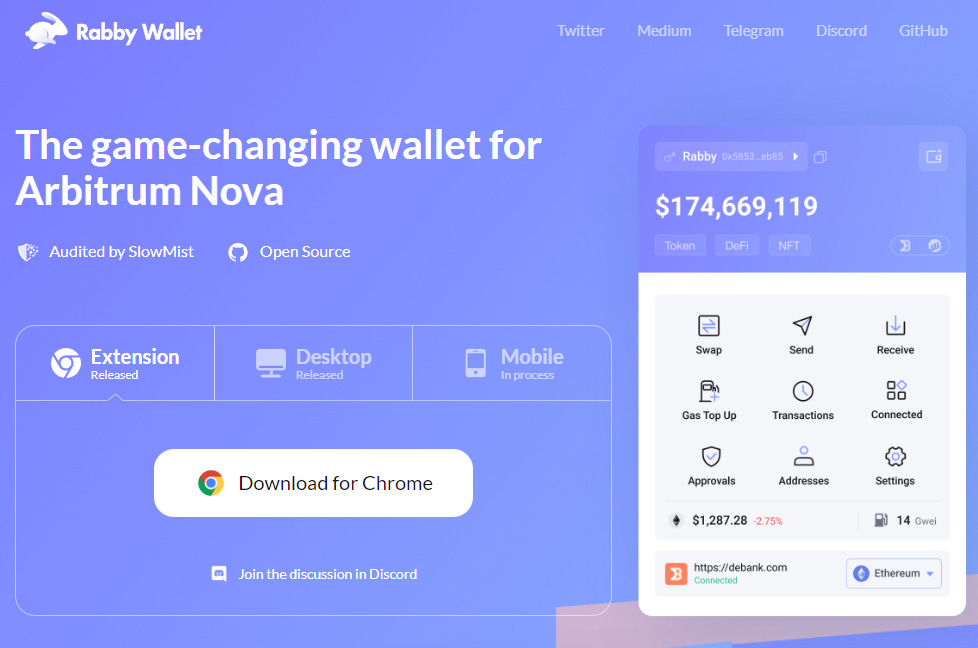
Check this out—the approvals screen makes it easy to revoke allowances without hunting through block explorers.
That was a relief during a test where a token had a dubious spender permission that I didn’t remember granting; I flipped it off quickly.
I snapped a screenshot to show a friend (oh, and by the way…) and realized that a clear visual of allowances can prevent costly mistakes that often happen when people blindly connect a dApp and click accept, because inertia and trust lead to bad outcomes.
So yes, small UX choices like that matter a lot.
Try it sensibly
Wow!
If you want to try it yourself, the extension is straightforward to install and configure.
Grab the official build from their site and go through the setup steps with a hardware wallet if you can.
I tend to prefer auditing settings first and creating a watch-only account before moving funds, and for convenience you can get the installer here: rabby wallet download, which is where I started during my tests.
Do not blindly install anything from random links; verify checksums and official channels, okay?
Really?
The built-in swap interface and aggregator is decent for quick trades, though it’s not a one-size-fits-all for best slippage control.
I tested small swaps across Uniswap and some DEXs on Polygon, and the routing looked reasonable while fees remained predictable.
On the other hand some power users might miss fine-grained gas controls, and if you’re regularly doing complex multi-step transactions you may want to script or use a dedicated tool instead of relying solely on a browser flow, which can be fragile during network congestion.
Still, for everyday moves it’s fast and stable enough to keep things moving.
Here’s the thing.
No wallet is magic and Rabby has trade-offs like any extension; it’s very very important to balance convenience with security.
I’m not 100% sure about long-term privacy guarantees because browser fingerprinting and extension states can leak info, and those are ecosystem-level issues more than Rabby’s alone.
Initially I thought a single wallet could solve all my cross-chain pains, but then realized that wallet design, user habits, and dApp behavior together create most of the risk surface, so you need layered practices—hardware keys, least privilege approvals, frequent revokes, and separated accounts for different purposes.
I’ll be honest: this part bugs me when teams gloss over hard trade-offs, but Rabby does show them more directly than many alternatives.
Hmm…
If you care about controlling approvals and want a cleaner browser wallet that treats permissions seriously, Rabby is worth a look.
It’s pragmatic and engineered for users who actually use DeFi daily rather than collectors who just hold and stare at a flashy dashboard.
There are nit-picks — occasional UI quirks, a few chains where integrations lag, and documentation that could be clearer — but the core ideas are solid and the team iterates frequently, so the experience keeps improving over time.
Try it cautiously, separate funds, and keep learning; that’s my takeaway and it leaves me cautiously optimistic rather than blindly enthusiastic.
FAQ
Is Rabby safe?
Really?
Short answer: it’s a well-built tool but not a silver bullet.
It uses standard extension patterns and supports hardware wallets, which reduces risk for custody.
You should still practice good hygiene: use separate accounts, revoke allowances, and avoid installing random plugins—no extension can defend against a compromised browser or social-engineering attacks.
So treat it as an improvement, not a fortress.
How do I recover my funds?
Whoa!
Your seed phrase and hardware backups are everything; export or back them up safely when you create an account.
Rabby itself doesn’t hold keys on a server, so recovery is your responsibility and follows the same rules as other non-custodial wallets.
If you lose a seed and no backup exists, there is pretty much nothing you can do except hope for a prior exported JSON or a remembered passphrase, which is why multiple backups across secure locations matter.
I’m biased toward offline cold storage for long-term holdings, but day-to-day use feels fine in a well-maintained extension.

Leave A Comment